
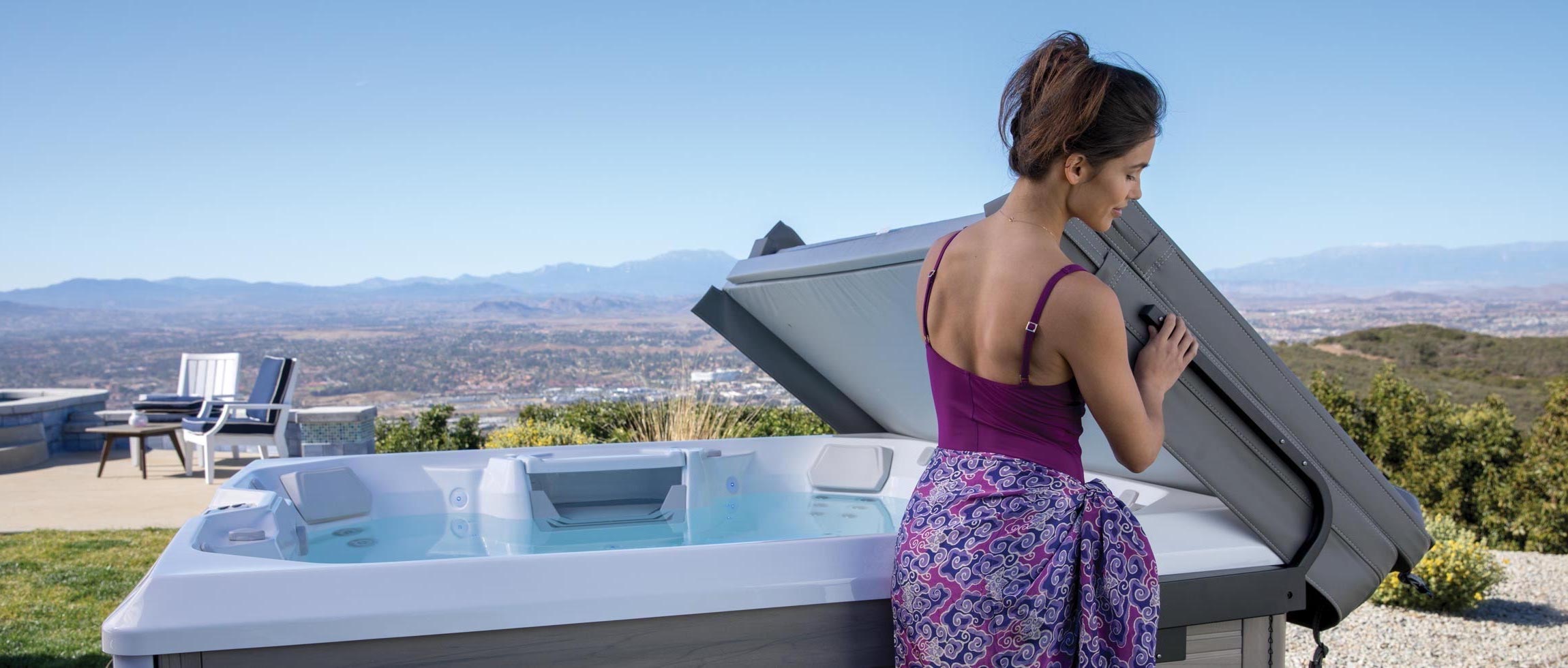
A hot tub cover is the least interesting part of your spa and the part that has the biggest effect on what you pay to run it. Covers wear out in four to six years, and they tend to fail quietly, so most people are running a bad cover for a full season before they replace it. The first cold week of the year is when it becomes obvious.
Five signs your cover is done
- It is heavy. A cover that took one person to lift last spring and takes two now is waterlogged. The foam core has absorbed moisture and lost most of its insulating value.
- It sags in the middle. Standing water pooling on top means the taper has flattened and the core has begun to break down.
- The vinyl is cracked or split at the fold. Once the seal is broken there, water gets straight into the foam.
- You can see steam escaping around the edges on a cold night. That is heat leaving, and it is metered.
- It smells musty when you open it. That is moisture and organic growth inside the core, and no amount of cleaning fixes it.
What a bad cover actually costs
Your spa loses heat two ways: through the shell and cabinet, and through the top. The shell is insulated once at the factory and does not change. The cover is the only part of that equation that degrades, and it is responsible for the majority of heat loss on a well built tub.
A waterlogged cover can add meaningfully to your monthly power bill through the winter, because the heater simply runs more often to hold temperature. Over a full cold season, the difference frequently exceeds the cost of the replacement cover. That is the part people are surprised by.
Getting the right replacement
Do not order from your spa’s model number alone. Measure the tub itself, because previous owners replace covers with near misses and cabinets get modified.
- Measure the outside edge of the shell, length and width, at the widest points
- Note the corner radius, since square corners and rounded corners are not interchangeable
- Check the skirt depth you need to clear your cabinet lip
- Confirm which side the fold should be on, based on where your steps and clearance are
- Ask about taper thickness. A thicker taper sheds water better and insulates more, and it is worth the small upcharge in a climate with real winters.
While you are at it: the fall spa checklist
- Drain, clean, and refill so you start the cold season with fresh water
- Clean or replace filters, and keep a spare set on hand
- Check the cover lifter hardware and tighten anything loose
- Inspect the cabinet skirt and equipment bay for gaps where cold air gets in
- Test your water and get your chemistry balanced before temperatures drop
Order a cover before the cold sets in
Covers are made to order, so there is a lead time. Ordering in September means you have it before you need it. Ordering in December means running a failing cover through the coldest weeks of the year.
Bring your measurements to either showroom, or call and we will walk you through it. If you would rather have someone come out, measure, and handle the swap, our service team can do that too.

